The next era of work will be defined by what organizations remember
We are producing more information than ever and retaining less of it than ever. The tools are getting better. The memory is getting worse. This is our thesis on where work is headed and why organizational memory will become critical infrastructure.

The information overload crisis
The average knowledge worker receives 121 emails per day, sits in 25.6 meetings per week, and uses 8 to 10 different applications to do their job. Slack alone processes over 1.5 billion messages per week across its platform. Every one of those messages contains a fragment of organizational knowledge: a decision, a commitment, a piece of context that someone will need later.
Almost none of it gets captured in a way that is searchable, structured, or connected to related information. It lives in threads that scroll past, in meeting recordings that nobody rewatches, in email chains that get buried.
This is not a productivity problem. Productivity tools are excellent. Slack is great for communication. Notion is great for documentation. Jira is great for tracking tasks. The problem is that no tool is responsible for remembering. The knowledge that flows between these tools evaporates.
The tools are getting better. The memory is getting worse.

The cross-tool fragmentation problem
A decision gets made in a Zoom call. The action items go to Jira. The context lives in a Google Doc. The follow-up happens in Slack. The budget is in a spreadsheet. The client relationship is in the CRM.
Six tools. One decision. No single place that connects all of these fragments into a coherent picture of what happened, why, and what was supposed to happen next.
When someone new joins the team, or when a project resurfaces after six months, or when a client asks "didn't we agree on something last quarter?"... nobody knows where to look. The answer exists somewhere across those six tools, but finding it takes hours. Usually, it is faster to just redo the work.
70% of organizational decisions get remade because the original context is scattered across tools that don't talk to each other.
The security problem nobody talks about
Every time an organization sends its meeting transcripts to an AI service for summarization, it is sending the most sensitive material it produces to a third party. Client names, financial figures, personnel decisions, legal strategy, competitive intelligence. All of it, flowing through someone else's servers.
Most organizations do not even realize this is happening. A well-meaning employee pastes a meeting transcript into ChatGPT to get action items. An entire quarter's worth of client strategy is now in a training dataset they do not control.

This is why we believe the intelligence layer for organizational memory must be self-contained. The model, the embeddings, the storage, the search, and the inference should all run on infrastructure the organization controls. Not because every organization needs air-gapped deployment. But because the option should exist, and the architecture should assume it from day one.
Context management is the next frontier
Search solved the problem of finding a specific document. Collaboration tools solved the problem of working together in real time. AI assistants are solving the problem of generating content.
But none of these solve the problem of context: understanding what happened before, who was involved, what was decided, what changed since then, and how it all connects. Context is the connective tissue of organizational knowledge. Without it, every conversation starts from scratch.

From search to recall
The next generation of knowledge tools will not just find documents. They will recall context: who said what, when it was decided, what changed since, and whether it contradicts something else.
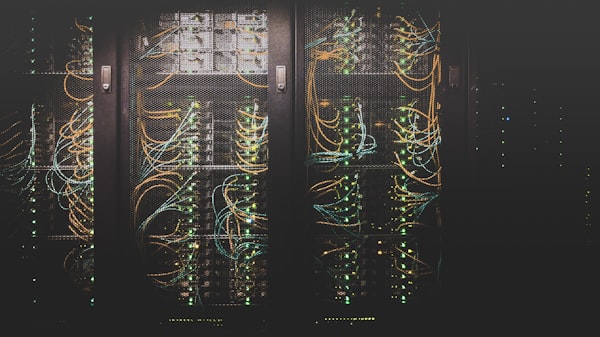
From documents to knowledge graphs
Static files are being replaced by living, interconnected knowledge structures where every entity, decision, and relationship is linked and queryable.
The knowledge graph thesis
We believe every organization will eventually have a knowledge graph. Not a static org chart or a wiki that someone has to maintain. A living, continuously updated graph of entities, relationships, decisions, and events that builds itself from the organization's daily activity.
This graph will be the foundation for a new class of applications. Meeting preparation tools that brief you with full context from every prior interaction. Onboarding systems that compress six months of institutional knowledge into searchable summaries. Compliance tools that detect contradictions between what was decided and what was done. Executive dashboards that show not just metrics but the decisions and context behind them.
Every organization will have a knowledge graph. The question is whether they build it manually or let AI compile it from their daily activity.

Where we are headed
Capture and recall
Rabbit extracts structured knowledge from meetings, emails, and messages. Teams can ask questions and get cited answers from their actual history.
Compiled knowledge
Living entity pages and topic summaries that update automatically. Knowledge that compounds with every interaction instead of being re-derived every time.
Proactive intelligence
Rabbit surfaces forgotten commitments, detects contradictions, and alerts teams before knowledge gaps become costly. The system anticipates what you need to know.
Memory as infrastructure
Every application has access to organizational memory through the Rabbit API. CRMs, project tools, communication platforms, and custom apps all share a unified knowledge layer.
Institutional intelligence
Organizations develop genuine institutional memory that persists across team changes, leadership transitions, and decades of operation. Knowledge becomes a durable asset, not a volatile one.
Why this matters now
The shift to remote and hybrid work accelerated the amnesia problem by an order of magnitude. When teams were co-located, institutional knowledge lived partly in hallway conversations, whiteboard sessions, and the ambient awareness of who was working on what. Remote work eliminated that ambient layer entirely.
At the same time, AI made it possible to process and structure organizational data at a scale that was never feasible before. Meeting transcripts that would have taken a human assistant hours to summarize can be extracted, classified, and linked in seconds.
These two trends together create both the urgency and the opportunity. Organizations are losing knowledge faster than ever, and for the first time, technology can capture it faster than it decays.
We are building Rabbit because we believe organizational memory will become as fundamental to how teams work as email, calendars, and chat. Not as another tool to check, but as the intelligence layer underneath all of them.
The organizations that remember will outperform those that don't. That is the future of work we are building toward.
Be part of the future
Join the teams already building with Rabbit.